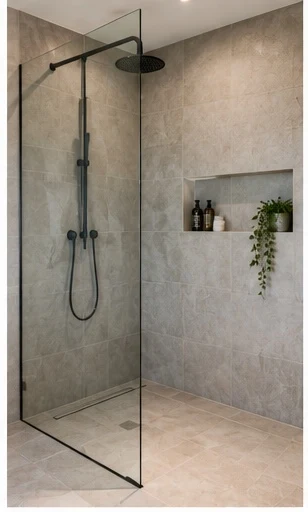
What microcement actually is
Microcement is a thin, cement-based coating modified with polymers, applied by steel trowel in several coats over a prepared surface. The finished layer is typically only a few millimetres thick. It is then sealed, usually with two or more coats of a clear protective sealer, and it is the sealer that gives it its water resistance and much of its sheen.
The appeal is obvious the moment you see it: a continuous surface that runs across the floor, up the walls and into the shower with no grout lines. Because it is hand-trowelled, every room has a slightly clouded, mineral look, with subtle variation in tone that tiles cannot copy.
It is sometimes confused with polished concrete, rendered walls or tadelakt-style lime plaster. They are different materials with different behaviour. Polished concrete is a structural slab ground back; microcement is a thin skin over something else, and that distinction is where most of its strengths and weaknesses come from.
How it goes on
A proper microcement installation is a sequence, not a single coat:
- Substrate check and preparation. The surface underneath has to be sound, clean, dry and stable. Loose material comes off, cracks are dealt with, and joints in sheet linings are reinforced.
- Waterproofing. In a wet area the membrane goes on first, to the same standard as it would under tiles.
- Primer and reinforcing mesh. Most systems use a primer and a fibreglass mesh embedded in the first coat to spread stress across board joints and changes of plane.
- Base coats. Usually two coarser coats that build body and flatten the surface.
- Finish coats. Two finer coats that create the final texture and colour movement, sanded between.
- Sealing. Several coats of sealer, with drying time between each and a curing period before the room is used.
Each step needs drying time, so a microcement bathroom is not a quicker job than a tiled one. On many systems it is slower.
The case for it
Seamless, with almost no grout. No grout lines means no grout to stain, crack or go mouldy. For people who have spent years scrubbing a shower floor, that alone is persuasive.
A calm, continuous look. Floor, walls and shower read as one surface. That can make a room feel larger and quieter, and it suits curved walls, recessed shelving and built-in benches that would be fiddly to tile.
It can sometimes go over existing surfaces. Because it is thin, microcement can in some cases be applied over sound existing tiles or a stable screed without full demolition. That avoids some mess and some tonnage in the skip — but only where the surface underneath is genuinely sound, and never as a way of skipping a membrane that needs replacing.
Thin build-up. A few millimetres rather than tile plus bed means fewer problems with door clearances and thresholds, which helps when one room is being done and the adjoining floor is staying.
The case against it
It depends almost entirely on the applicator. Tiles are a factory product laid by a tradesperson; microcement is effectively made on the wall by the person holding the trowel. Two installers using the same system can produce very different results. Look at finished work in person, in daylight, and ask how long ago it was done.
Movement shows up as cracks. A thin rigid-ish skin cannot bridge much movement. Timber floors that flex, sheet linings that shift, a house that settles, or a substrate that was not fully cured can all telegraph through as hairline cracks. Repairs are possible but rarely invisible.
It needs sealing, then resealing. The sealer is what stops water, soap and oil soaking in. It wears, especially on floors, in the shower and around the basin. Resealing is an ongoing maintenance job, not a one-off.
It can be slippery. A smooth, glossy finish looks beautiful and can be treacherous when wet and soapy. On any wet floor, specify a textured or anti-slip finish and ask what the finished surface is rated to.
It scratches and marks. Grit underfoot, dragged furniture and dropped bottles can scratch or chip the surface. Some people like the patina; others find it frustrating in a new room.
Waterproofing: the part people get wrong
Microcement is not a waterproofing membrane. A sealed surface resists water, but it is a finish. Water will eventually find a hairline crack, a worn patch of sealer or a junction, and behind it there has to be a membrane doing the real work — exactly as there is behind tiles.
In a shower and across the wet areas of a bathroom, that means a compliant membrane system installed and detailed properly: to the floor, up the walls to the required heights, and around the waste, the corners and every penetration. The standard covering domestic wet areas in Australia is AS 3740, and the NCC sets the overall requirements. Exactly what applies to your room, and how the microcement system and the membrane are made compatible, is something to confirm with your builder and waterproofer before work starts, not afterwards. Our waterproofing page explains the membrane stage in more detail.
Falls matter just as much. A seamless floor that ponds is still a floor that ponds, and with no grout joints to hint at the high spots, poor falls can be harder to see until water sits there.
Looking after a microcement bathroom
- Clean with a pH-neutral cleaner and a soft cloth or mop. Avoid bleach, acidic cleaners, vinegar, abrasive creams and scouring pads, which can strip or etch the sealer.
- Squeegee the shower after use and ventilate the room well. Hard water left to dry leaves marks on any surface.
- Wipe up oils, hair dye, cosmetics and cleaning products promptly rather than letting them sit.
- Put felt pads under anything that moves and keep grit off the floor.
- Reseal on the schedule the installer gives you, and keep the product details so the same compatible sealer is used.
Microcement or tiles?
Neither is simply better. Microcement buys you a seamless look, few joints and a thin build-up, in exchange for a heavier reliance on the installer, a sensitivity to movement and a standing maintenance commitment. Tiles are more forgiving of an imperfect substrate, easy to replace one piece at a time, and available in rated slip-resistant finishes as a matter of course — but they bring grout with them.
A few rules of thumb:
- If the floor structure has any bounce or the building moves seasonally, favour tiles or confine microcement to walls.
- If you want the look but not the risk underfoot, microcement walls with a tiled floor is a sensible hybrid.
- If low maintenance matters most, a large-format tile with epoxy grout may suit you better than a sealed surface that needs periodic attention.
For the wider design picture — palette, lighting, layout and how finishes work together — see our bathroom design ideas guide.
Next steps
If you are weighing up finishes for a full renovation, start with what a bathroom renovation involves and our notes on bathroom tiling so you can compare like with like. The cost guide explains what moves the price of a renovation, and a quote after a site measure is the only way to know what either finish would cost in your room. If you are on Sydney's North Shore, we can arrange that measure.
Questions people ask before they commit
Is microcement waterproof?
Not on its own. A sealed microcement surface is water-resistant, but it is a decorative finish, not a waterproofing membrane. In a shower or any wet area, a compliant membrane still has to go on underneath it. Confirm the system and the detailing with your builder and waterproofer, who should be working to AS 3740 and the NCC.
Can microcement go over existing tiles?
Sometimes. Sound, well-bonded tiles on a stable substrate can be prepared and coated, which is one of the finish's attractions. Drummy or cracked tiles, failed grout, movement in the floor or any sign of leaking rule it out, and over-tiling a wet area does nothing to fix an old membrane that may have failed. Most applicators will want to inspect first.
Is a microcement shower floor slippery?
It can be, particularly with a smooth, high-sheen seal. Ask for a textured or anti-slip finish on any floor that gets wet, and ask what slip rating the finished surface achieves rather than the product in general.
How long does microcement last in a bathroom?
The base layers can last as long as the room if the substrate stays still, but the protective sealer is a wear layer. Expect to reseal at intervals, more often on floors and in showers than on walls. How often depends on the system and on how the room is used, so get the maintenance schedule in writing.
Is microcement cheaper than tiling?
Not reliably. The material is thin, but the work is slow, multi-coat and highly skill-dependent, and the substrate preparation is thorough. Whether it comes in above or below a tiled finish depends on the room, the system and the applicator, so compare written quotes for both rather than assuming.