Chatswood is two suburbs in one bathroom sense
Around the Chatswood interchange — where the T1 North Shore line meets the Metro — the housing is overwhelmingly apartments, from 1960s and 1970s walk-ups on the surrounding streets to the towers that have gone up near Westfield and Chatswood Chase. Move further out toward Willoughby, Roseville and Artarmon and the stock changes to interwar and post-war houses on conventional blocks.
Those two Chatswoods present completely different renovation jobs, and quoting them the same way is how people end up disappointed.
The apartment job
Most Chatswood unit bathrooms share the same three characteristics: a compact room of four to five square metres, a concrete slab floor, and a waste that connects to a common stack.
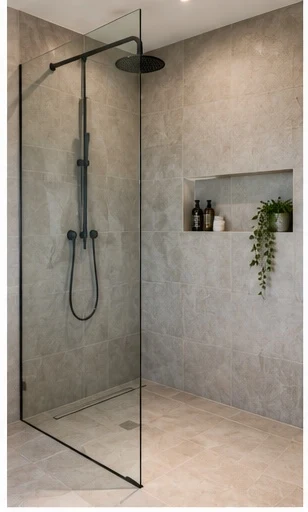
The slab is the defining constraint. It makes moving the toilet or the shower waste expensive, because the choice is cutting concrete or building the floor up to create fall. It also means that most of the value in the renovation has to come from everything other than the layout — and fortunately, quite a lot does. Removing an unused bath for a walk-in shower, going to a slimline wall-hung vanity, tiling full height, and putting proper light at the mirror will transform a room without a single waste moving.
Strata is the second constraint, and it is the one that costs time rather than money. Approval for work affecting waterproofing or common property is normally required before anything starts, and Chatswood's larger buildings tend to have thorough by-laws. Building the approval into the program at the front is the difference between a smooth job and a stalled one.
The house job
The interwar and post-war houses toward Willoughby and Roseville typically have a suspended timber floor, an original bathroom in the middle of the plan and a separate toilet beside it. Here the highest-value move is usually combining those two rooms into one — the timber floor makes the drainage change far more tractable than a slab would, and the resulting room is genuinely different rather than merely refreshed.
Willoughby City Council covers all of it. Heritage items exist across the area, so if the property is listed it is worth confirming what applies before design decisions lock in.
What it costs
Chatswood unit bathrooms mostly land in the $18,000–$28,000 like-for-like band. Houses with a layout change sit in the $25,000–$40,000 range and above. The cost page sets out the 2026 bands in full, and how a renovation runs covers the timeline.
Nearby
We also work in Willoughby, Roseville and Lane Cove, plus Artarmon and Naremburn.
Call 02 4602 1201 or send the room details through.
Frequently asked questions
Do I need strata approval for a bathroom renovation in Chatswood?
In almost every Chatswood apartment, yes. Work affecting waterproofing or common property generally requires owners corporation approval in a NSW strata scheme, and Chatswood's larger buildings typically have detailed by-laws covering work hours, lift protection and notice to neighbours. Start that application before you commission anything.
Can the bathroom layout be changed in a Chatswood unit?
Sometimes, but the concrete slab is the constraint. Moving a waste means either cutting the slab or building the floor up to create new fall — both are possible, both cost real money, and both will need owners corporation approval on top of the usual. Most Chatswood unit renovations get much better value from working with the existing waste positions.
How do you get materials into an apartment on a high floor?
Through the building's service lift, with protection fitted, inside the hours the by-laws allow. This is a genuine scheduling constraint rather than a detail — a building that permits deliveries only between 9am and 3pm on weekdays changes how a program is built, and it is factored into the quote rather than discovered later.
What should I do first if I'm renovating a Chatswood apartment bathroom?
Talk to your strata manager before anything else. Find out what your scheme requires for approval, when the next meeting is if one is needed, and what the by-laws say about work hours and lift access. That single conversation determines your realistic start date, and it is free. Selections and quotes can happen in parallel, but the approval sets the calendar.